Worship Matters: an evening event
News of an evening with Graham Kendrick for worship leaders and worship groups organized by LICC (the London Institute for Contemporary Christianity)
0 CommentsWorship Matters:
Leading Worship for the Frontline — 18th September
Worship matters. It expresses our understanding of God, shapes us as disciples and is the core activity of churches. So what does it mean to lead worship in a church that wants to take whole-life discipleship seriously?
Join Graham Kendrick for Worship Matters: Leading Worship for the Frontline — an evening that offers insight, ideas and encouragement for worship leaders and worshippers, who want worship to engage with the everyday experiences of life on our Frontlines.
Why not invite members of your worship team to begin a conversation together about how your church’s experience of worship can be developed to embrace a whole-life perspective.
Hosted by Neil Hudson, Director of LICC’s Imagine Project, the evening will also include input from Antony Billington, LICC’s Head of Theology, who will offer some biblical-theological reflection on whole-life worship. You will be equipped and encouraged as you return to your local churches.
Things you need to know:
Date: Thursday 18th September, 6:30pm – 8:30pm
Venue: LICC, St Peter’s, Vere Street, London W1G 0DQ
Cost: £8 (£6 concession) — includes light refreshments
This event will be streamed live across the internet, if you can’t make it to London why not consider hosting your own group and engage with us on the night via livestream?


Uses for an altar table
Updated
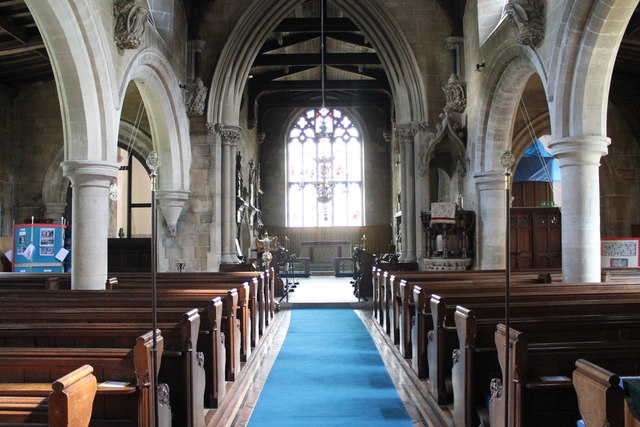
The role (and other aspects) of the altar or holy table will be considered in some detail in a future post. But this story in today’s press is of some interest.
The Daily Telegraph reports that Lincoln diocese has banned [a church] from using altar to serve cups of tea.
According to the report
Worshippers at the St Michael and All Angels Church in Uffington, Lincolnshire, wanted their oak altar to double up as a place to “serve refreshments”.
Update: Law and Religion UK provides some more details. Perhaps most significant is that the altar is one in a chapel, not the church’s main altar, pictured above and in the Telegraph report. The petition was to place a table in the chapel which could be used to serve refreshments, and which would be used occasionally as an altar.
But the Chancellor of the diocese, Mark Bishop,
23 Commentsdecided the altar could only be used for worship, not to serve snacks.
Ruling that “an interchangeable use for the altar” was certainly not acceptable, he said a “decent table of wood, stone or other suitable material” should be provided in every church or chapel for celebration of Holy Communion.
He added: “The table, as becomes the table of Lord, shall be kept in a sufficient and seemly manner, and from time to time repaired, and shall be covered in the time of Divine Service with a covering of silk or other decent stuff, and with a fair white linen cloth at the time of the celebration of the Holy Communion.
“It would be completely inappropriate for an altar to be used occasionally for the celebration of Holy Communion, but more frequently ‘for the service of refreshments’.
“The obligation of the Churchwardens is to ensure that the Lord’s Table is kept in a ‘sufficient and seemly manner’ and I am quite satisfied that what is proposed does not amount to that.”
Liturgy for the reburial of a long-dead king and a liturgical re-ordering project

There probably aren’t many examples to hand for the authorities at Leicester Cathedral, who will be compiling the service for the re-burial of Richard III, scheduled for Thursday 26 March 2015.
In a press release last week the Cathedral authorities say that
- On Sunday 22 March the University of Leicester will transfer the mortal remains into a lead-lined coffin and they will travel from Leicester to Bosworth
- In the evening, the remains of Richard III will be received into the care of the Cathedral
- They will lie in repose for 3 days
- They will be reburied on the morning of Thursday 26 March
- The next days, Friday 27 March and Saturday 28 March, the tomb stone itself will be put in place and revealed and there will be a service to mark the completion of the reinterment.
The reburial service will be broadcast live on Channel 4, with highlights being shown in the evening.
Further details can be read on the Cathedral’s Richard III site.
We hope that liturgical material associated with these events will be available to link to nearer the time. Here is what the Cathedral is saying right now:

[T]his raises interesting questions about language. Vespers of the Dead is not familiar today and services were in Latin. Praying for the dead can be a controversial issue, but, despite the condemnation in the Articles of Faith, is part of Anglican practice, although not for all. And in law the Church of England is a continuous body since Saxon times, therefore we are the successor of the Church to which Richard belonged, so an Anglican funeral is entirely right, however we choose to diversify within that. … So what we shall do with Richard, is sculpt something which both recognises tradition and Richard’s faith, but speaks also to the modern world.
Meanwhile the Cathedral is appealing for £2.5 millions for the re-ordering project which will include a fitting setting for the King’s remains. Some details of the reordering can be found at the Leicester diocesan website and at the BBC. Although full drawings and images of the current plans do not seem to be generally available, information of the 2013 plans submitted to the Cathedrals Fabric Commission can be found in some detail here. My understanding is that the only substantial change from the earlier plans is in the plinth on which the tomb slab will be placed.
2 CommentsMarking the centenary of the start of the First World War

The Church of England has produced a set of Liturgical Resources for use at services commemorating the anniversary of World War One. They are available here as part of a section of the website dedicated to the commemoration.
A candle-lit vigil of prayer and an act of solemn reflection to mark the centenary of the start of the First World War will be held in Westminster Abbey on 4 August 2014. The service is one of a number of events being announced by the Government to mark the centenary of the Great War. Drawing upon Sir Edward Grey’s famous remark that “the lights are going out all over Europe”, the Abbey will mark the centenary by moving from light into darkness, until one candle remains at the Grave of the Unknown Soldier, which will be extinguished at 11.00pm to mark the moment at which Britain entered the war.
UPDATE
Westminster Abbey has now published the Order of Service for the Vigil Service. It can be found as a pdf file on this page. You can access the pdf directly here
The Eucharistic Assembly
Earlier this year I attended a deanery confirmation service. In his address the retired assistant bishop who was presiding posed the congregation a question. He asked us to consider what we should do if we wanted to see the face of God. After considering various possibilities he suggested we turn our heads to left and right — to see the face of God in our neighbours.
Each of us is made in the image of God; each of us is a child of God. We meet together as the people of God — a subset of God’s people who recognize that role and are able to be in that particular place at that particular time. The assembly, the community, is transformed by the act of worship, transformed by recognizing the image of God, not just in our fellow worshippers on that occasion, but by recognizing that the image of God can be found in each human being.
What then does it mean that each is made in the image of God? It means a number of things, among them that each person has value, each person is of worth, as an end in themself, and not as a means to some other end. That applies both to the ‘me’ and to the ‘others’: each person needs to remember that they are made in the image of God, and that everyone else is also made in the image of God. And it applies regardless of whether the other person recognizes it.
These are the people who come together regularly Sunday by Sunday, or perhaps occasionally; these are the people who together constitute the eucharistic assembly. They come in faith and hope in order to worship and celebrate together, responding to Jesus’s call to sinners and outcasts to sit with him at God’s table. Week by week, together they constitute the ‘church’ in that place, the local ‘ecclesia’. They come together as the children of God, the people of God, made in God’s image. They are nourished, doubly so, by the Word of God. And they go out as the Body of Christ. They come together as individuals, children, people. They are transformed by worship into one corporate group, one body.
They do not gather just to watch or listen to a show or a performance, to a great preacher, or a wonderful choir, or an inspiring concert. They do not come to participate from the sidelines like a football crowd cheering their team on. The liturgy is not some spectator sport or piece of theatre. Nor, equally, do they come to make private individual devotions, a private relationship between each worshipper and their God.
Instead, each member of the assembly is important and has a role to play in what the assembly does as a whole; each person is an active participant in the corporate worshipping group — because each is made in the image of God. The action of each member of the assembly, that common purpose, constitutes them as the assembly, and that person as a member of it. Within the assembly different people have different roles. Some may read, some may lead intercessions, others may lead singing or play musical instruments, someone will preside and others assist, someone will preach. Others will participate by joining in various responses, hymns and songs. Each of these (and other) roles is a ministry, an act of service to the assembly, an act that facilitates and enables the worship of the whole assembly to take place. Some of these roles will have formal appointment, and others will be by informal agreement of the assembly. Either way, they perform their roles within the context of, and with the explicit or implicit agreement of the assembly. Some of these roles help to constitute the assembly itself, in particular the role of president or presider.
Together all these people, convened for this purpose, form the eucharistic assembly, the local church, the ecclesia. The adoption by the early Christians of the word ‘ecclesia’ to describe their assembly indicates both their past and their future. The ecclesia (Greek: εκκλησία) was the term used in ancient Greek city-states for the democratic decision-making gathering of the city’s free-born men. When Christians began to use the term such semi-democratic city-states were already long gone. The word indicates perhaps the Christian intention of a free gathering of equals. But a gathering transformed from just free-born males to include Roman citizens and non-citizens, slaves as well as the free, poor as well as rich, female as well as male. This was a revolutionary ecclesia representing the people living in God’s kingdom. Truly, the eucharistic assembly, the ecclesia, was a transforming act.
In the same way, we gather today as a revolutionary gathering of all sorts and conditions, the people of God, sharing in God’s love. Recognition of this plays a part in the transformation of the worshipping community.
We are transformed by our worship in many ways; the one that will be focussed on here is how we are transformed by recognizing in each other the image of God. As the bishop said, we can look to left and right and see the image of God in our immediate neighbours. In most churches we will not generally see the faces of our fellow worshippers during the service, but there too we will find the image of God.
This is an ideal: it has to be recognized that not all our services live up to this ideal, not all those who attend are ready or able to participate in this way, and not all our buildings make it easy. We shall explore in future posts how the assembly can address these limitations, how the assembly gives legitimacy to its ministers, how the local assembly is part of a wider assembly across the world. In many situations, a simple explanation to the members of the assembly, both clergy and laity, may be enough for them to begin to realize their vocation, their ministry, as part of the assembly which comes together to worship and to hear and be present with, and be transformed by, the Word of God.
0 CommentsVestments, robes and canon law
The General Synod, meeting at York, on Saturday debated the mandatory use of robes and vestments for clergy at some services. The record of the proceedings states:
Private Members’ Motions
Canon B 8 (GS 1944A and GS 1944B)
The Revd Christopher Hobbs (London) moved:
‘That this Synod call on the Business Committee to introduce draft legislation to amend the law relating to the vesture of ministers so that, without altering the principles set out in paragraphs 1 and 2 of Canon B 8. the wearing of the forms of vesture referred to in paragraphs 3, 4 and 5 of that Canon becomes optional rather than mandatory.’
The motion was voted on and passed by the Synod. The three amendments were not carried.
The audio of the evening session is available here.
The press reports this as the Church sweeping away the rules and allowing clergy to wear what they like
- The Mail — Church gives OK to vicars in shellsuits
- The Express — Church gives its blessing for vicar dress-down Sundays
John Keble

John Keble’s liturgical impact, like that of Benedict, is indirect but significant. It was on this day in 1833 that Keble preached a sermon at the University Church in Oxford. It was a fairly obscure sermon to the Assize Judges on what we might regard as an obscure topic (the suppression of a number of Irish bishoprics by Parliament), but it was regarded by John Newman as the beginning of the Oxford Movement — a recovery of the sense that the Church exists independently of the State. That Movement was subsequently responsible for a considerable liturgical enrichment and diversification of the life of the Church of England, leading to a renewal of the Eucharistic life of the Church and an increased awareness of ritual and symbolism. Keble did not play a significant part in these later developments, living instead the life of a country parson, scholar and poet. His poetry continues to be greatly valued and several of his poems are still sung as hymns.
Keble was born in 1792, the son of a priest, and studied at Oxford where he became a Fellow of Oriel College at the age of nineteen. His collection of poems, The Christian Year, was publsihed in 1827, and he was elected Professor of Poetry at Oxford in 1831. In 1836 he left Oxford to became a parish priest at Hursley near Winchester, and he served there until his death in 1866. In his memory, his friends and supporters founded Keble College, Oxford.
0 CommentsFather of the eternal Word,
in whose encompassing love
all things in peace and order move:
grant that, as your servant John Keble
adored you in all creation,
so we may have a humble heart of love
for the mysteries of your Church
and know your love to be new every morning,
in Jesus Christ your Son our Lord.
Additional Texts for Holy Baptism (GS 1958)
Updated with press reports
The additional texts for baptism were considered by the General Synod, meeting at York, on Sunday afternoon, and sent to a revision committee, which is the normal process. The official report records that:
Drafts for First Consideration introduced by the House of Bishops
The Chair of the Steering Committee, the Bishop of Sodor and Man, moved:
‘That the liturgical business entitled “Additional texts for Holy Baptism” be considered for revision in committee.’
The motion was approved by the Synod.
Press reports
There is coverage of this in some of Monday’s papers:
- The Times has a story headlined Devil demoted to ‘cartoon-like character’ (most of the story is behind the Times’s paywall)
- In the Telegraph Philip Almond expresses his opinion on the role of the Devil: Giving the Devil his Due
Benedict, Father of Western Monasticism

Benedict’s interest to liturgy is indirect. As the author of the monastic Rule that bears his name, he did much to encourage the spread of monasticism in the western Church, and consequently was a major influence on daily liturgical prayer down to the present day.
He was born in Nursia in central Italy around the year 480. As a young man he was sent to study in Rome, but was soon appalled by the corruption in society and withdrew to live as a hermit at Subiaco. He quickly attracted disciples and began to establish small monasteries in the neighbourhood. Around the year 525 he moved to Monte Cassino with a band of loyal monks. Later in life Benedict wrote his Rule for Monks, based on his own experience of fallible people striving to live out the gospel. He never intended to found an ‘order’ but his Rule was so good that it was disseminated and widely followed, becoming the model for all western monasticism. Benedict died at Monte Cassino in about the year 550, probably on 21 March, but he is generally commmeorated on 11 July in Anglican and other Calendars.
0 CommentsEternal God,
who made Benedict a wise master
in the school of your service
and a guide to many called into community
to follow the rule of Christ:
grant that we may put your love before all else
and seek with joy the way of your commandments;
through Jesus Christ your Son our Lord.
Amen.
trial Canadian Collects
The Anglican Church of Canada is trialling some new collects
The [Canadian] General Synod of 2010 mandated Faith, Worship, and Ministry to establish a Liturgy Task Force to work on the revision of our contemporary language liturgical texts. This Task Force has, in turn, been authorized by the Council of General Synod to release the first phase of its new texts for trial use and feedback as they become available. These draft materials — beginning with Collects for Sundays — are encouraged for use where permitted by the diocesan bishops. We ask that those who use them also participate in the process to feed back your evaluation of the resources to the Liturgy Task Force for its consideration in the final editorial phase.
The text of the Collects for use this year (Year A) ‘from Pentecost to the Reign of Christ’ can be downloaded as a pdf via the above link. Unlike the Collects in Common Worship which are determined by the named Sundays after Trinity, these prayers are aligned to the Sunday reading cycle.
(Thanks to Phillip Tovey for drawing my attention to this. Readers are welcome to send suggestions of suitable links either by email or as a comment on an existing article.)
3 Comments